
Sorting out money and mobile data before your first tour makes everything easier in Cebu. The city side is straightforward, with plenty of ATMs and card payments, but island days still run on cash and patchy signal. Here is how it all works, without the guesswork.
Pesos and exchanging money
The currency is the Philippine peso, written PHP or with the ₱ sign. You will see notes in several denominations and coins for small change. Small bills are precious: many small shops, tricycles and stalls struggle to change large notes, so break them at malls, supermarkets and hotels when you can.
You can exchange cash at:
- The airport, convenient for a small amount on arrival, though rates are often less favourable.
- Money changers in malls in Cebu City and Mactan, which often give better rates.
- Banks, which are reliable but can be slower and keep office hours.
Bring clean, undamaged notes of major currencies such as US dollars, euros or yen. Torn or marked notes may be refused. Always count your money at the counter before you walk away.
ATMs and cards
ATMs are easy to find in malls, banks and many convenience stores in Cebu City and Mactan. Expect:
- A local fee on most foreign-card withdrawals, plus whatever your home bank charges. Taking out larger amounts less often keeps fees down.
- A withdrawal limit per transaction, which varies by bank and machine.
- Occasional out-of-cash machines on weekends and holidays. Do not wait until your last peso.
- If offered, decline the machine's own conversion and choose to be charged in pesos. It is usually better value.
Visa and Mastercard are accepted at malls, hotels, resorts and larger restaurants, sometimes with a card fee. Tell your bank you are travelling so your card is not blocked. Carry a second card in case one stops working.
Many Filipinos pay with e-wallets like GCash and Maya using QR codes. These are mainly for local users, so as a visitor plan on cash and cards.
Cash for islands and tips
Once you leave the city, cash becomes essential. On the small islands off Mactan, in South Cebu towns and on many island stops, there are no ATMs and cards are rarely accepted. Bring enough pesos for:
- Snacks, drinks and fresh seafood at island stops.
- Local environmental or entrance fees not included in your tour (we tell you in advance which apply).
- Tips for boat crews, drivers and guides, if you were happy with the service.
- Souvenirs from small vendors.
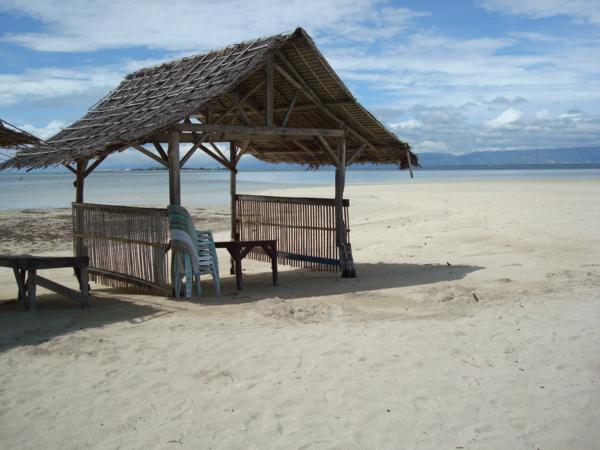
Keep your cash in a dry bag on boat days, and split it so you do not carry everything at once. Our travel costs guide helps you estimate how much you need.
SIM cards and eSIMs
Having mobile data makes Grab, maps and messaging easy. Your options:
- Local SIM card. The main networks are Smart and Globe, with DITO as a newer option. SIM cards are sold at the airport and in malls. Since a SIM registration law took effect, every SIM must be registered with your passport, usually through an app or website. Airport sellers can often help with this.
- Local eSIM. Some Philippine networks offer eSIMs for compatible phones, which you can set up before you land.
- International eSIM apps. Convenient and quick to set up from home; compare data amounts and validity.
- Roaming from your home provider. The easiest, but check the cost first.
Coverage is generally good in Cebu City, Mactan and along the main roads, with weaker signal in the mountains, in parts of South Cebu and on small islands. Having two networks (for example a local SIM plus an eSIM on a different network) gives you a backup.
Wifi and internet
Hotels, malls and cafés in Cebu City and Mactan usually have wifi, though speed varies. Outside the city, be realistic:
- On island hopping trips, there is often no wifi and mobile signal comes and goes. Enjoy the break.
- Small island cottages and rural resorts may have slow or no wifi. If you need to work, check before booking.
- Download offline maps, your booking confirmations and a translation app before leaving the hotel.
- Keep important numbers saved, including your hotel and your tour operator, in case data is down.
A simple routine that works
On arrival, change or withdraw a modest amount at the airport, set up your SIM or eSIM, and take a transfer to your hotel. The next day, top up your cash at a mall ATM or money changer, and ask for some small bills. Before each island or South Cebu day, check you have enough pesos for snacks, fees and tips, and charge your power bank. Keep a small reserve of cash and a backup card in the hotel safe.
Need help on arrival? We can include airport transfers in your package, and our team can point you to the nearest money changer and SIM counter. See our airport transfer guide and packing list, or browse our hotel packages.
Frequently asked questions
Should I bring cash or cards to Cebu?
Both. Cards work in malls, hotels and larger restaurants, but cash in pesos is needed for small shops, tips, island stops and rural areas.
Are there ATMs on the islands near Mactan?
Generally no. Withdraw enough pesos in Cebu City or Mactan before your island hopping day.
Do I need to register a SIM card in the Philippines?
Yes. All SIM cards must be registered, and visitors register with their passport, usually through the network's app or website.
Is there wifi on Cebu island hopping tours?
Usually not. Mobile signal on small islands is patchy, so download maps and documents before you go.
Prices on tour cards are live from our booking system. Fees set by local governments (entrance and environmental fees) can change; we confirm everything when you book.