
Ask a Cebuano what to eat and the first answer will be lechon. It deserves the fame, but there is a lot more to the island's food: grilled skewers, sour seafood soups, crispy pork rinds from Carcar and sweets every town claims as its own. Here is a simple guide to what to try and how locals eat it.
Cebu lechon
Lechon is a whole pig roasted slowly over charcoal while it turns on a bamboo spit. The Cebu style is stuffed with lemongrass, garlic, green onions, salt and pepper, and sometimes bay leaf or star anise, so the meat is seasoned from the inside. That is why many people say Cebu lechon needs no sauce, unlike the Manila style served with liver sauce. The prize is the thin, crackling skin, which is best eaten soon after it comes off the fire.
You can buy lechon by the kilo at lechon stalls and markets, order it in restaurants, or see whole pigs at fiestas, weddings and Christmas parties. A spicy version (often labelled "spicy" or "with chili") is popular too. Lechon is usually sold out by early afternoon at busy stalls, so go before lunch.
Other dishes to try
- Puso: rice cooked inside a small pouch woven from coconut leaves. You cut it open and eat it with almost anything grilled.
- Barbecue skewers: pork, chicken and every part of the chicken, from intestines to feet, grilled over charcoal and dipped in vinegar with onions and chili.
- Tuslob buwa: a street dish from the Pasil area where you dip puso into a bubbling sauce of pork brain and liver. Very local and an acquired taste.
- Ngohiong: a Cebu take on the spring roll, seasoned with five-spice and deep-fried, served with a sweet-spicy sauce.
- Balbacua: a slow-cooked, rich stew of beef skin and tendons, perfect after a long day.
- Siomai sa tisa: steamed dumplings from the Tisa area, served with chili and soy, found at stalls across the city.
- Chorizo de Cebu: small, sweet, reddish sausages, often grilled for breakfast with rice and egg.
- Kinilaw: fresh raw fish cured in vinegar or coconut vinegar with ginger, onion and chili.
Where locals eat
You do not need a fancy restaurant to eat well in Cebu. Locals eat in three main kinds of places:
- Carinderias: small eateries with dishes in pots on the counter. You point at what you want, and it comes with rice. Cheap, fast and very local.
- Street grills: open-air barbecue strips, often called Larsian-style after the best-known one, where you pick raw skewers from a tray, they are grilled for you, and you eat with puso at shared tables. Best in the evening.
- Markets: Carbon Market downtown is the city's big old market for fruit, vegetables and food stalls. The Taboan area is known for dried fish. Go in the morning, keep your bag in front of you and bring small bills.
Malls and the IT Park area have the full range of modern restaurants, including many that serve lechon and Cebuano dishes in comfortable air-conditioning, which is a good start if you are cautious.
Sutukil in Mactan
On Mactan the classic meal is sutukil: sugba (grill), tula (soup) and kilaw (vinegar-cured raw fish). At seafood places near the Lapu-Lapu Shrine and along the coast, you choose fish, squid, prawns, crabs or shells from the display, they weigh them, and you say how each one should be cooked. A soup of fish with ginger and tamarind, a grilled fish and a bowl of kinilaw make a good table for a group.
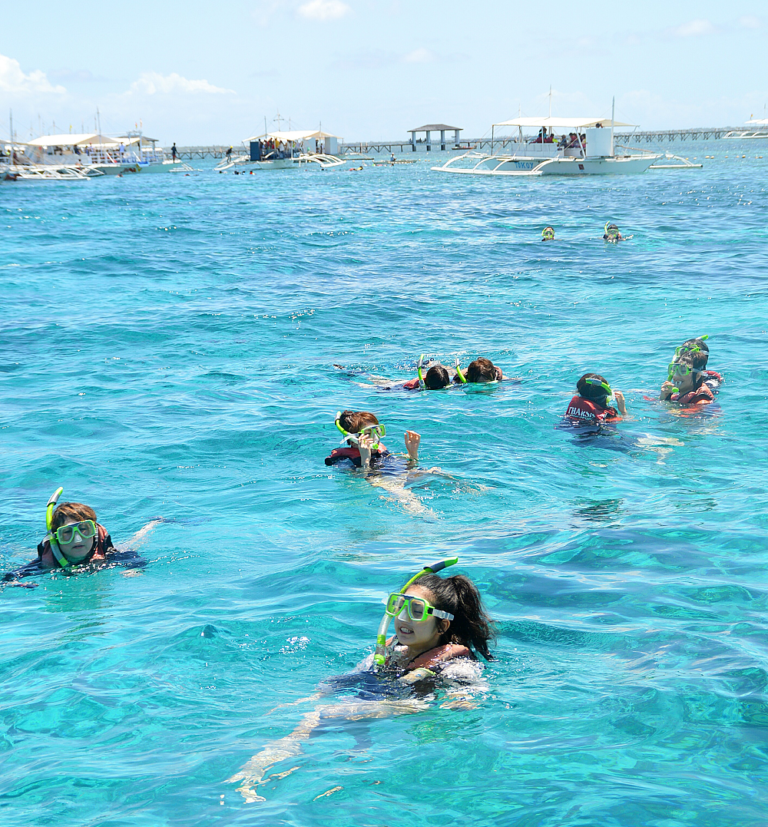
Prices are by weight, and some seafood like lobster or large crabs can be expensive. Always ask the price per kilo and the total before cooking. It fits nicely after a Mactan city tour or a day of island hopping, where the boat crew usually serves a grilled lunch on the island too.
Sweets and pasalubong
Filipinos bring pasalubong, food gifts, home from every trip. From Cebu, the usual choices are:
- Dried mangoes, the most famous Cebu product, sold everywhere including the airport.
- Danggit: small, salted, sun-dried fish, fried crisp for breakfast.
- Otap: a flaky, sugary oval biscuit.
- Rosquillos: ring-shaped cookies from Liloan, north of the city.
- Chicharon and ampao from Carcar in the south: crispy pork rinds and puffed rice bars, sold along the main road.
- Torta from Argao, a soft, sweet bread, and masareal, a peanut bar from Mandaue.
If you are travelling south, the stop in Carcar fits naturally into a day trip. See our South Cebu road trip guide.
Food tips for visitors
- Drink bottled or filtered water. Most restaurants serve purified water, but ask if unsure.
- Street food is generally fine when it is cooked hot in front of you. Be more careful with raw kinilaw in very hot weather if your stomach is sensitive.
- Eating with your hands is normal at grills and seafood places; there is always a sink.
- Rice comes with almost everything. Puso is often "unlimited" only at certain places, so ask.
- During Sinulog in January, food stalls and restaurants are packed. Eat early.
- For a sense of food budgets, see our Cebu travel costs guide.
Frequently asked questions
What food is Cebu famous for?
Cebu is famous for lechon, whole roasted pig stuffed with herbs. Other local favourites are puso rice, sutukil seafood, ngohiong, tuslob buwa and dried mangoes.
Why does Cebu lechon not need sauce?
The pig is stuffed with lemongrass, garlic, onions, salt and pepper before roasting, so the meat is seasoned from inside. Many people still enjoy it with vinegar and chili.
What is sutukil?
Sutukil combines sugba (grilled), tula (soup) and kilaw (raw fish in vinegar). You choose fresh seafood by weight in Mactan and decide how each piece is cooked.
What should I buy as pasalubong from Cebu?
Dried mangoes, danggit dried fish, otap biscuits, rosquillos and Carcar chicharon are the classic choices.
Prices on tour cards are live from our booking system. Fees set by local governments (entrance and environmental fees) can change; we confirm everything when you book.